

Vitamin C is an essential nutrient that plays an important role in collagen formation, antioxidant protection, iron absorption and the normal functioning of the immune system. When vitamin C supplementation is required through a healthcare professional, injectable formulations may be considered in specific clinical situations.
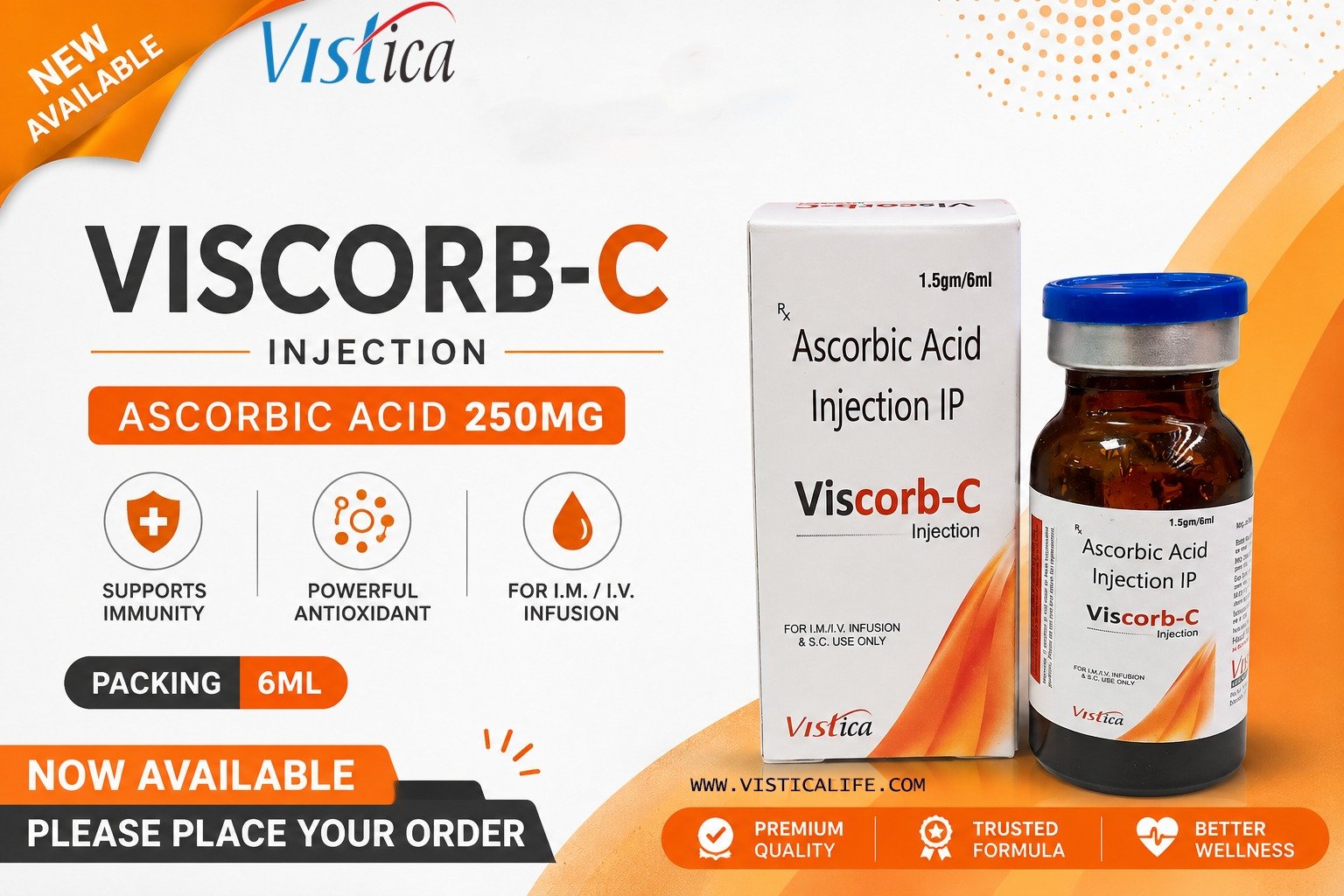
Viscorb-C Injection, from Vistica, is an ascorbic acid injection presented in the supplied product image. The product packaging identifies Ascorbic Acid Injection IP and displays a concentration of 1.5 g/6 mL, equivalent to 250 mg/mL. The promotional artwork also highlights Ascorbic Acid 250 mg and a 6 mL pack size.
This article explores the product’s composition, the role of vitamin C in the body, potential clinical applications, administration considerations and important precautions.
1. What Is Viscorb-C Injection?
 Viscorb-C Injection is an injectable vitamin C formulation containing ascorbic acid. Vitamin C is a water-soluble vitamin that the human body needs for several physiological processes, including collagen synthesis, antioxidant defence and normal tissue maintenance.
Unlike oral vitamin C supplements, injectable preparations are administered by a qualified healthcare professional when the prescribed treatment requires this route.
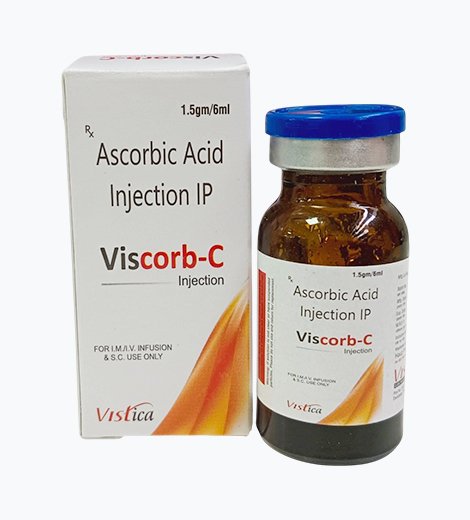
Viscorb-C Injection is marketed under the Vistica brand. Its packaging identifies it as Ascorbic Acid Injection IP and specifies a concentration of 1.5 g in 6 mL.
The product should be used only for an appropriate medical indication following professional assessment and in accordance with its approved prescribing information.
2. Viscorb-C Injection Composition and Packing
Understanding the product’s composition and strength is essential for healthcare professionals.
Product details:
- Brand name: Viscorb-C Injection
- Manufacturer/marketing brand shown: Vistica
- Active ingredient: Ascorbic Acid (Vitamin C)
- Strength highlighted in promotional artwork: 250 mg
- Concentration displayed on packaging: 1.5 g/6 mL, equivalent to 250 mg/mL
- Packing: 6 mL vial
- Dosage form: Injection
- Administration information on packaging: I.M./I.V. infusion and S.C. use only, as displayed on the pack
3. Understanding the Role of Vitamin C
Vitamin C, also known as ascorbic acid, is an essential nutrient that supports several functions throughout the body.
A. Antioxidant Protection
Vitamin C acts as an antioxidant, helping protect cells from oxidative damage caused by free radicals. Free radicals are produced naturally during metabolism and may also arise from environmental exposures.
Adequate vitamin C intake contributes to the body’s normal antioxidant defence systems. However, the use of injectable vitamin C should be based on a recognised clinical need rather than general wellness claims alone.
B. Collagen Formation
Collagen is an important structural protein found in skin, connective tissue, blood vessels, cartilage and bones.
Vitamin C is necessary for normal collagen synthesis. Adequate vitamin C status therefore supports normal tissue structure and repair processes.
C. Normal Immune Function
Vitamin C contributes to the normal functioning of the immune system. Maintaining adequate vitamin C levels is important for overall nutritional health.
It is important to understand that vitamin C supplementation does not guarantee protection against infections and should not replace vaccination, appropriate medical treatment or other recommended preventive measures.
D. Iron Absorption
Vitamin C improves the absorption of non-haem iron, which is commonly found in plant-based foods and fortified products.
This nutritional role is particularly relevant to people whose diets contain significant amounts of plant-derived iron. Injectable vitamin C, however, should not be used routinely for this purpose unless a healthcare professional identifies an appropriate indication.
4. Potential Clinical Uses of Ascorbic Acid Injection
The use of injectable ascorbic acid depends on the patient’s nutritional status, clinical condition, ability to take oral supplements and the applicable product approval.
Treatment of Vitamin C Deficiency
Vitamin C deficiency can occur when dietary intake is inadequate over an extended period or when certain medical conditions affect nutritional status.
Severe deficiency may lead to scurvy, which can cause fatigue, swollen or bleeding gums, bruising, joint discomfort and impaired wound healing.
A healthcare professional may consider vitamin C supplementation, including an injectable preparation where appropriate, for patients with a confirmed or suspected deficiency who require that route of administration.
Supplementation When Oral Intake Is Inadequate
Some patients may have difficulty taking oral medication or may be unable to absorb nutrients adequately because of particular medical conditions.
In selected situations, a clinician may consider injectable supplementation based on an assessment of the patient’s nutritional requirements and available treatment options.
Support for Normal Collagen Synthesis
Because vitamin C is necessary for collagen production, adequate levels are important for maintaining normal connective tissue and supporting the body’s natural tissue-repair processes.
Supplementation may be appropriate when a deficiency or other recognised clinical indication exists. It should not be presented as a substitute for wound care, surgery or treatment of the underlying condition.
Antioxidant Nutritional Support
Vitamin C has an established physiological antioxidant role. Correcting inadequate vitamin C levels helps maintain normal nutritional function.
Nevertheless, the benefits of injectable vitamin C depend on the clinical circumstances, and high-dose administration should not be assumed to provide additional benefits for otherwise healthy individuals.
5. Why Is Injectable Vitamin C Sometimes Considered?
Oral vitamin C is suitable for many people who need supplementation. Injectable vitamin C may be considered when a healthcare professional determines that an injectable route is medically appropriate.
Potential considerations include:
- Difficulty swallowing or taking oral supplements.
- Particular conditions affecting gastrointestinal absorption.
- A clinically significant deficiency requiring supervised treatment.
- A treatment plan in which a healthcare professional determines that injectable supplementation is appropriate.
The injectable route is not automatically more effective or more beneficial than oral supplementation for every patient. The route, dose and duration should be selected according to the clinical indication and the patient’s individual circumstances.
6. Administration and Dosage Considerations
Viscorb-C Injection is a prescription injectable product and should be administered only by an appropriately qualified healthcare professional.
The supplied packaging indicates intramuscular and intravenous infusion routes and also mentions subcutaneous use. The permitted route must be confirmed against the current approved prescribing information before administration.
The dose and frequency depend on factors such as:
- The reason for treatment.
- The severity of vitamin C deficiency, if present.
- The patient’s age and clinical condition.
- Kidney function and relevant medical history.
- Other medicines and supplements being used.
Patients should not self-inject the product or determine their own dose. Injectable medicines require appropriate preparation, sterile handling, route selection and monitoring.
7. Possible Side Effects and Safety Precautions
As with other injectable medicines, ascorbic acid injections may cause adverse effects. The risks can vary with the dose, route of administration and the patient’s health.
Possible concerns include:
- Pain, redness or irritation at the injection site.
- Nausea or other gastrointestinal symptoms.
- Reactions associated with intravenous administration.
- Hypersensitivity reactions, which may rarely be serious.
- Complications associated with excessive vitamin C exposure in susceptible individuals.
Seek urgent medical attention if symptoms such as difficulty breathing, swelling of the face or throat, or a severe allergic reaction occur after administration.
Patients Who Need Particular Caution
Kidney disease or a history of kidney stones: High vitamin C exposure can increase oxalate production, creating concerns for some patients with impaired kidney function or a history of oxalate stones.
Glucose-6-phosphate dehydrogenase (G6PD) deficiency: High doses of vitamin C may increase the risk of haemolysis in susceptible individuals.
Iron-overload disorders: Vitamin C can increase iron absorption and may require particular caution in patients with conditions involving excessive iron accumulation.
Pregnancy and breastfeeding: Use should be guided by a healthcare professional after assessing the clinical need and relevant product information.
Patients should disclose their medical history, allergies, prescription medicines and supplements before receiving treatment.
8. Storage and Handling
Proper storage and handling help maintain the quality and integrity of injectable medicines.
Healthcare professionals should follow the storage instructions printed on the approved product packaging. The vial should be inspected before use for visible particles, leakage, damage or changes in appearance.
Do not use a vial if its packaging is damaged, its integrity is questionable or the product does not meet the applicable inspection requirements. Single-use containers should be handled and discarded according to the product instructions and applicable biomedical-waste procedures.
9. Why Choose a Product from Vistica?
Viscorb-C Injection is presented under the Vistica brand, with product packaging that identifies its active ingredient and strength.
When evaluating an injectable medicine, healthcare professionals should consider the approved composition, product quality, packaging integrity, prescribing information and suitability for the patient’s clinical needs.
For pharmaceutical distributors and healthcare institutions, accurate product information and responsible promotion are important when evaluating available formulations.
Product selection should always be based on clinical suitability, regulatory requirements and the advice of an authorised healthcare professional rather than promotional claims alone.
10. Frequently Asked Questions (FAQs)
What is Viscorb-C Injection used for?
Viscorb-C Injection contains ascorbic acid, or vitamin C. Injectable vitamin C may be used for an appropriate clinical indication, such as treating deficiency when a healthcare professional considers the injectable route necessary. The approved uses should be confirmed from the product’s prescribing information.
What is the composition of Viscorb-C Injection?
The supplied product image identifies Ascorbic Acid Injection IP, with a concentration of 1.5 g/6 mL. This equals 250 mg/mL. The complete vial therefore contains 1,500 mg of ascorbic acid in 6 mL.
Can Viscorb-C Injection be self-administered?
No. It should be administered by an appropriately qualified healthcare professional according to the prescribed dose, permitted route and approved product instructions.
Is injectable vitamin C suitable for everyone?
No. Patients with kidney problems, a history of oxalate stones, G6PD deficiency or iron-overload disorders may require particular precautions. A healthcare professional should assess suitability before treatment.
Does vitamin C injection prevent infections?
Vitamin C supports normal immune function, but receiving an injection does not guarantee protection against infections or replace established preventive measures and medical treatment.
What is the packing size of Viscorb-C Injection?
The supplied promotional image shows a 6 mL vial. The product label displays a concentration of 1.5 g/6 mL.
Conclusion
Viscorb-C Injection is a Vistica-branded ascorbic acid formulation intended for use under appropriate medical supervision. Vitamin C plays important roles in antioxidant protection, collagen synthesis, normal immune function and iron absorption.
The supplied product artwork identifies a 6 mL vial containing 1.5 g of ascorbic acid, equivalent to 250 mg/mL. Healthcare professionals should verify the current approved product information before prescribing or administering the medicine.
Responsible use involves confirming the indication, selecting the appropriate route and dose, considering patient-specific risks, and following safe injection and storage practices.
For further product information, visit www.visticalife.com.